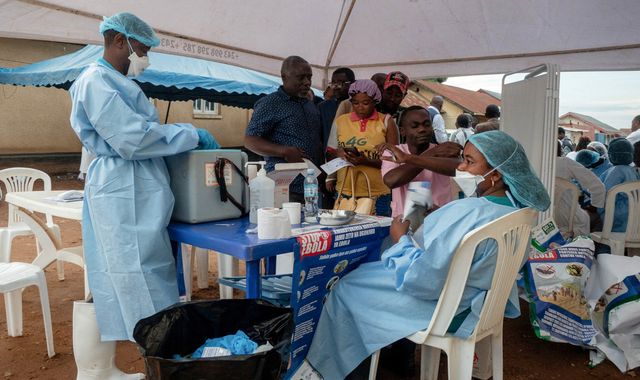
Another health worker was injured in the attack on Friday - the latest in a series of violent incidents fuelled by misinformation about the deadly virus.
Officials said the two were targeted by a group wielding machetes and batons, who accused the pair of spreading the disease by contaminating water sources.
The nurse had worked at the general hospital in the town of Bafwasende in Tshopo province, and had been helping raise awareness about the Bundibugyo strain, which the DRC's health ministry says has killed more than 4,800 people in the country since the start of the outbreak in May.
A local health official said they were "shocked at how the population turned against this nurse", and that it was "impossible to believe that he was mistaken for a stranger".
The World Health Organization (WHO) condemned the attack, with its director-general, Tedros Adhanom Ghebreyesus, insisting that health workers "must be able to work in dignity and safety".
In a social media post, Julien Harneis, the UN's senior Ebola coordinator, said the nurse's death was "a loss to the Ebola response and an even greater loss to patients".
A local official said that health workers in Bafwasende are currently staying at the general hospital under police guard, while the army was also briefly deployed to the area.
The official added: "None of the nurses have slept at their homes because they fear for their security."
Numerous attacks on health workers
Recent attacks on health workers have targeted hospitals, vehicles and staff involved in the Ebola response - adding to the difficulty of containing the spread of the disease.
The house of another community worker raising awareness about Ebola in the region was set on fire last week, officials said.
Meanwhile, last month, a Congolese politician was beaten to death for defending government measures in dealing with the outbreak.
Earlier this month, both Kenya and Nigeria reported their first cases of Ebola linked to the current outbreak.
The patient in Nigeria, the Ugandan-born wife of a Swiss diplomat, has been medically evacuated to Switzerland for treatment for the virus, authorities said on Monday.
More from Sky News:
Israel 'genocide' in Gaza has continued after ceasefire, UN claims
Trump critic wins Brazilian election
Nigerian health minister Muhammad Ali Pate said her condition had improved significantly, and she was stable, conscious and able to communicate.
"This does not mean she is not still infectious, hence the strict protocols in place," Mr Pate wrote on X.
The Swiss government said: "This situation does not pose any risk to public health in Switzerland."
The woman tested positive after returning to Nigeria's capital, Abuja, from Uganda. Nigerian authorities say they have not yet established how she contracted the virus.
Kenya has reported nine cases and two deaths, while Uganda also reported cases in May and June. However, the WHO declared the latter country free of the virus in August.
The transmission means the strain has the widest geographic spread of any Ebola outbreak in Africa to date.
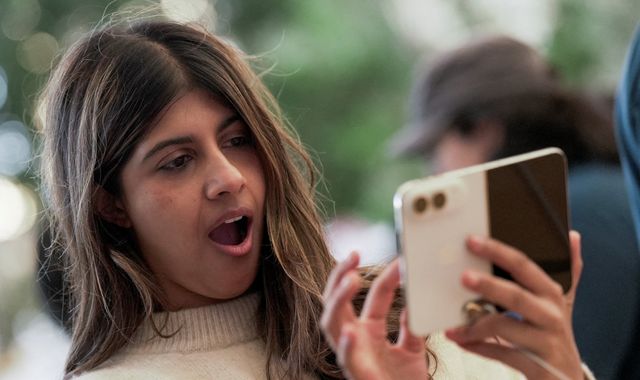
Social media posts over the weekend appeared to show cracks and lines on the inner display of the iPhone Duo, which was released on 23 October and has a starting price of £1,999 ($2,668) in the UK.
On Monday, Apple said it was "aware of an issue impacting the inner display on a small number of iPhone Duo units", adding that the company would replace affected devices.
The technology giant did not comment on what might cause the issue, or how many devices had been impacted.
Roughly the size of a passport when closed, the iPhone Duo opens to reveal a 7.6in (19.3cm) screen - the largest ever for an iPhone - and allows people to use an Apple Pencil on the device - a capability previously reserved to iPad users.
The Duo - Apple most expensive iPhone to date - enables users to split the screen to use two different apps on the device, or two windows of the same website for things like comparison shopping.
At the company's launch event last month, Apple CEO John Ternus, who formally took over from Tim Cook on 1 September, said the new device will "redefine the experience of using a foldable phone".
While the iPhone Duo is the first foldable handset developed by Apple, several of the company's rivals - including Samsung, Motorola and Google - have already released foldable devices.
More from Sky News:
Anthropic is going public: What you need to know
Microsoft offers 'buyouts' to 60,000 staff
The release of the Duo comes after Apple unveiled advances in artificial intelligence earlier this year, including upgrades to its Siri assistant, and emphasised a focus on privacy and day-to-day use as the company tries to catch up with rivals on AI.
In June, it was reported that millions of UK Apple customers are set to be included in a class action lawsuit against the tech giant over the storage system iCloud.
If successful, the £3bn lawsuit could see around 39.7 million people receive compensation.
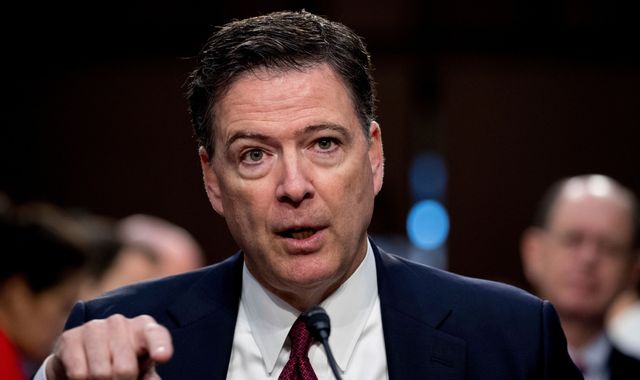
He is accused of transmission of national defence information and conspiracy to transmit national defence information.
A judge unsealed the details of the case on Monday and said the facts underlying the investigation had "been subject to considerable press coverage".
Referencing previous claims against him, Mr Comey said in an Instagram video, "they're back again" and insisted he was "still innocent".
"It would almost be funny if it weren't such an appalling abuse of the Department of Justice, one that we cannot become numb to," he said.
Mr Comey said the next few years would be "hard for all of us" and that he wasn't afraid.
His lawyers have filed a motion to dismiss the charges. The case is "time barred," they argue, because the government had 10 years to bring the case "by obtaining a grand jury indictment."
The charges stem from a 5 October 2016 New York Times article entitled "Yahoo Said to Have Aided U.S. Email Surveillance by Adapting Spam Filter".
Mr Comey is accused of directing staff to speak to the article's writer, Charlie Savage, to "correct misinformation" and "thereby illegally transferred classified information".
The details were set out in a filing, unsealed on Monday, by special assistant US attorney Dustin Farahnak.
The criminal case is the third to be brought against Comey since Trump's second term began.
More from Sky News:
US singer Chris Brown avoids jail over bottle attack
Woman treated for Ebola in Nigeria is evacuated to Switzerland
The first case was dismissed last year.
And the former FBI director was indicted over a photo he posted of sea shells spelling out "86 47".
Prosecutors claim the numbers were a coded threat against President Trump's life.
The case has been delayed until early 2027.
Key divisions including AI experiences, finance and human resources will be impacted but the Reuters news agency reported that marketing, commercial business and security would not be touched.
Money latest: 'Pension lump sum decision made ahead of budget'
The news, which first came to light in an apparent leak to Business Insider, was revealed to workers in a blog post.
"This (buyout) offer will be available to eligible employees in participating teams in Canada, India, the United Kingdom and the United States at level 70 and below," Microsoft said.
"This is a time-limited, voluntary program that gives those who are eligible the opportunity to leave Microsoft with financial support and career planning resources", the company's chief people officer Amy Coleman explained.
She added: "Eligible employees will receive an email with a link to their Voluntary Exit Offer details within the next few hours".
The development follows 4,800 job losses announced in the summer amid a "reset" of its Xbox gaming unit and shift towards AI tools.
It is understood the company has more than 220,000 workers across the world, with approximately 6,000 in the UK.
It was not clear how many people Microsoft was aiming to lose, or whether there was even a target.
Microsoft's UK press operation had no details to add to what was in the blog on the numbers to be receiving the offer in this country.
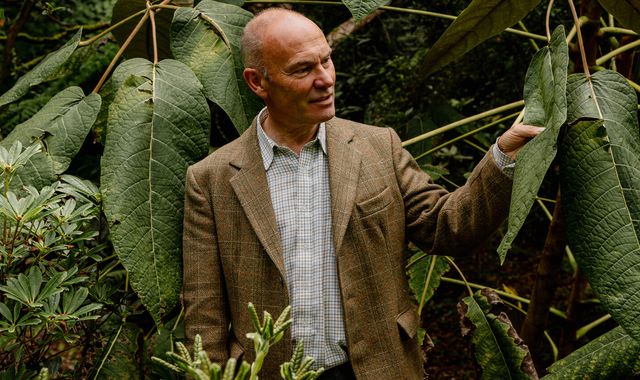
Richard Baines, 60, was fatally injured in the Castle Douglas area of Dumfries and Galloway on Sunday.
Mr Baines was the curator of Logan Botanic Garden, a regional garden of the Royal Botanic Garden Edinburgh (RBGE).
David Knott, director of horticulture at RGBE, said Mr Baines was hit while walking near his home.
Paying tribute, Mr Knott said of Mr Baines: "He was primarily responsible for a number of significant developments and initiatives at Logan including the first 'all green' public conservatory powered by green energy in the UK.
"During his tenure, Logan also successfully gained a number of accolades including being voted the 'best garden in the UK' by Which in 2021."
Mr Knott said Logan was also the first garden in Scotland to gain a gold Green Business Tourism award and install electric vehicle charging points, culminating in it being awarded five-star status as a visitor attraction by VisitScotland.
He added: "It will, however, be for his passion and enthusiasm for plants that he will be remembered through significantly increasing and expanding the plant collection at Logan, participating and leading fieldwork in China, Canary Islands and Vietnam from which seven plant species are currently being published that are new to science.
"Richard's contribution as an enthusiastic plantsman and curator at Logan and to the Royal Botanic Garden Edinburgh's wider work and culture has been immeasurable, and he will be deeply missed by many."
Check the weather where you are
Storm Boelo pummelled parts of the UK, bringing 84mph gusts and a third of a month's rain to pockets of Scotland.
A man in his 20s was also killed in Finchley, north London, by a falling tree.
Two women were also taken to hospital after they were struck by another falling tree in Aberfeldy, Perth and Kinross.
A fresh yellow warning for wind kicks in at 6pm on Monday and will be in place until 3am Tuesday.
The alert stretches along the west of the UK, covering parts of North West England, Northern Ireland, South West England, Strathclyde, South West Scotland and Wales.
The Met Office forecasts gusts of 45-50mph inland and 60-65mph along exposed coasts and over high ground.
The strong winds will be accompanied by heavy rain at times, and there could be some disruption, the forecaster added.
A further yellow warning for wind covering much of Scotland will then be in place between 3am and 9pm on Tuesday.
The Met Office said gusts of 50-60mph are "possible quite widely" and coastal or exposed areas in the northwest and far north of the country "could see gusts of 70mph or more".
On Monday morning, Scottish and Southern Electricity Networks (SSEN) said around 25,000 customers remained without power, while around 70,000 had been reconnected.
In Aberdeenshire, 13 primary schools without power were shut, while Ellon Academy was closed because of storm damage.
Ten primary schools were shut in the Highlands.
Western Isles Council said that all schools in the Western Isles will be closed to pupils on Tuesday - as high winds are forecast at the time of the school commute.
ScotRail has warned customers to expect disruption on Tuesday as some routes will operate with speed restrictions.
The Scottish Environment Protection Agency (SEPA) has issued an amber risk of flooding in the Western Isles, Caithness and Sutherland and the Northern Isles due to the likelihood of high tides and large waves.
The Scottish Government Resilience Room (SGoRR) met on Monday to discuss the situation.
Scotland's Social Justice and Housing Secretary Shirley-Anne Somerville, who chaired the meeting, said: "More high winds, rain and coastal flooding is forecast today and into tomorrow, and it is important to note that buildings and trees that were weakened over the weekend will be particularly vulnerable.
"I would urge the public to continue to check their local weather forecast and follow the advice of the Met Office, SEPA and the police to ensure they stay safe."